Aicinām vēl šonedēļ piedalīties lietotāju apmierinātības aptaujā!
Paldies par viedokli!

|
Republic of Latvia Cabinet Regarding Housing Affordability Guidelines 2023-20271. The Housing Affordability Guidelines 2023-2027 (hereinafter - the Guidelines) shall be approved. 2. The Ministry of Economics shall be determined as the responsible authority in the implementation of the Guidelines, while the Ministry of Finance, the Ministry of Environmental Protection and Regional Development, the Ministry of Justice, the Ministry of Welfare, and the Ministry of Climate and Energy shall be determined as the co-responsible authorities. 3. The Ministry of Economics shall prepare and the Minister for Economics shall, in accordance with the laid down procedures, submit the following to the Cabinet: 3.1. by 1 July 2024, the plan for the implementation of the Guidelines; 3.2. by 31 December 2025, the interim impact evaluation of the implementation of the Guidelines. 4. In 2023 and 2024, the responsible and co-responsible authorities shall implement the tasks included in the Guidelines in line with the State budget funds allocated thereto. The issue of allocating additional State budget funds for 2025 and subsequent years for the implementation of the tasks laid down in the Guidelines shall be discussed in the Cabinet within the framework of the process of the preparation of the draft law On the State Budget for 2025 and On the Budget Framework for 2025, 2026, and 2027 together with the applications submitted by all ministries and central State institutions for priority measures, considering the financial capacity of the State budget. If, during the process of the preparation of the draft law on the State budget, additional State budget funding for the implementation of the tasks laid down in the Guidelines is not allocated or is allocated partially, the responsible and co-responsible authorities shall ensure that those tasks laid down in the Guidelines that can be ensured in conformity with the allocated State budget funds are implemented. 5. Issues concerning the improvement of tax policy shall be examined within the framework of the process of preparing the Tax Policy Guidelines 2024-2027. Prime Minister E. Siliņa Minister for Economics V. Valainis
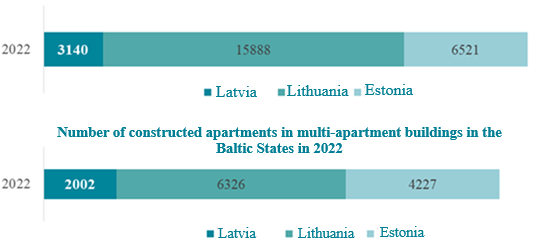
(Cabinet Order No. 739 HOUSING AFFORDABILITY GUIDELINES 2023-20272023 Content Abbreviations Summary Introduction Objective, Policies, and Performance-based Indicators of the Housing Affordability Guidelines Characterisation of the Housing Situation 1. Support for Vulnerable Population Groups 1.1. Housing Allowance 1.2. Assistance through Renting out Local Government Housing a. Residential Spaces Owned or Leased by a Local Government b. Assistance through the Provision of a Temporary Residential Space 1.3. Housing as a Social Service 1.4. Requirements for the Quality and Accessibility of a Local Government Apartment 1.5. Tasks 2. Support for Middle-income Households 2.1. Support for Affordable Rental Housing 2.2. Tasks 3. Support for Upper-middle-income Households 3.1. Support for Households for the Purchase or Construction of a Housing 3.2. Support for Developers in Housing Construction 3.3. Tasks 4. Support for the Improvement of the Existing Housing Stock 4.1. Housing Maintenance 4.2. Renovation of Buildings 4.3. Environmental Accessibility 4.4. Tasks Annex 1: Action Directions and Tasks Annex 2: Link-up of the Guidelines to Policy Planning Documents and Legal Acts Annex 3: Indicative Evaluation of the Impact on State and Local Government Budgets Abbreviations Altum - akciju sabiedrība "Attīstības finanšu institūcija Altum" [joint-stock company Development Finance Institution Altum] RRF - Recovery and Resilience Facility UN - United Nations DI - deinstitutionalisation CEB - Council of Europe Development Bank CSB - Central Statistical Bureau EIB - European Investment Bank Eurostat - Statistical Office of the European Union MoE - Ministry of Economics EU - European Union EC - European Commission ERDF - European Regional Development Fund MoF - Ministry of Finance MHDs - mental health disorders MoCE - Ministry of Climate and Energy ECL - Employers' Confederation of Latvia MoW - Ministry of Welfare LALRG - Latvian Association of Local and Regional Governments LCCI - Latvian Chamber of Commerce and Industry NDP - National Development Plan 2021-2027 NECP - National Energy and Climate Plan NGOs - non-governmental organisations OECD - Organisation for Economic Co-operation and Development CSCC - Cross-sectoral Coordination Centre Providus - biedrība "Sabiedriskās politikas centrs PROVIDUS" [association Centre for Public Policy PROVIDUS] MoEPRD - Ministry of Environmental Protection and Regional Development Summary High-quality affordable housing is one of the fundamental needs of the population. High-quality affordable housing is a crucial prerequisite for economic development as it affects not only the level of well-being of households and reproduction of population but also labour mobility, the creation of new jobs, access to opportunities for economic growth by either enabling the active participation of inhabitants in the labour market or preventing it, and also the reduction of poverty and social exclusion. Compared to other European countries, households in Latvia do not spend particularly much for housing; however, the share of households experiencing housing deprivation is three times higher than the average indicator of the EU. Due to the population's low purchasing power, households lack sufficient financial resources to maintain their housing in a good technical condition which has resulted in an ageing housing stock. A contributing factor is also the insufficient construction of a new housing stock and an underdeveloped rental market. It would be necessary to build 10 000 dwellings annually to ensure adequate renewal of the housing stock. Households face housing affordability and quality problems regardless of whether housing is owned or rented. Households also face a shortage of supply both in terms of quality and space, especially in regions with increasing employment. Even if a household manages to find a suitable dwelling or wish to build a new one in the regions, it faces cautious lending practices and requirements for higher own funding established by banks. As for vulnerable population groups, even if they are eligible for assistance for resolving housing matters, they might have to wait a long time until local governments rent them a dwelling. Meanwhile, Latvia has a high share of households with a level of income that prevents them from being eligible for housing support, but whose income is too low for them to afford to purchase dwelling on their own. The Housing Affordability Guidelines 2023-2027 (hereinafter - the Guidelines) include action directions, policy indicators, and set of tasks to promote housing affordability, providing solutions for ensuring housing affordability for households of different income levels, including the lowest-income households, and to ensure both the improvement of the existing housing stock and the development of a new housing stock.1 The Guidelines define four problem areas within the framework of which actions are required to promote housing affordability: 1. Vulnerable persons do not receive support or support for addressing housing affordability issues that is appropriate to our times, and there is a shortage of high-quality housing intended for local government assistance. 2. There is a shortage of affordable high-quality rental dwellings. 3. The amount of new housing built for purchase or rent is insufficient. 4. Investment in housing maintenance and improvement is insufficient. Based on the evaluation of the identified issues, the objective of housing policy, action directions for its achievement, and performance-based indicators have been defined, and also a vision of the necessary directions for the investment of public funding has been presented. Meanwhile, given the identified needs in the housing sector, and also the limited public funding, it is also necessary to define tasks that are related to the improvement of tax policy and should be addressed accordingly during the process of developing the Tax Policy Guidelines. Annex 1 to the Guidelines outlines the tasks to be implemented to achieve the action directions, the deadlines for their implementation, and the responsible authorities. Annex 2 includes information on legal acts and policy planning documents relevant to the Guidelines. Annex 3 includes an indicative evaluation of the impact on State and local government budgets. In the course of implementing the action directions and tasks outlined in the Guidelines, the responsible authorities will also evaluate the tasks to be implemented to provide aid for commercial activity and will, where applicable, apply the framework for the control of aid for commercial activity in the implementation of those tasks. Introduction High-quality affordable housing is one of the fundamental needs of the population. Housing affordability is a crucial element for economic development as it affects not only the level of well-being of households, but also their access to opportunities for economic growth by either enabling their active participation in the labour market and economy in general or preventing them therefrom. A well-functioning housing market promotes mobility which, in turn, ensures efficient allocation of human resources and jobs within the labour market. Housing quality problems are mainly the result of the persistently low purchasing power and income of the population. Although the disposable income of households increases every year (in 2021, household income increased by 6.5 % compared to 2020, reaching EUR 1523.582), it is still insufficient to build substantial savings to purchase or rent housing that meets modern requirements, and it also causes challenges for maintaining and renewing the existing housing stock. The housing stock is ageing, as housing built since 2001 in Latvia accounts for only 7.6 % of the total housing stock in Latvia3. In terms of the construction of new housing, Latvia falls well behind Estonia and Lithuania. In 2022, 3140 dwellings4 were put into service in Latvia; however, significantly more housing units were built in both Estonia and Lithuania, i.e. 6521 dwellings in Estonia5 and 15 888 dwellings in Lithuania6. Furthermore, new dwellings are constructed or purchased mostly in the region of the capital, while the housing lending volumes in the regions remain very low. There is also a shortage of social housing in Latvia. Latvia has one of the smallest social housing stocks, with social housing accounting for only 2 % of the total housing stock7. In addition, social apartments are in poor condition. According to the survey conducted by the Ombudsman of the Republic of Latvia in 2018, out of 3286 vacant local government apartments only 1046 apartments were suitable for living. Statistically, Latvian households do not spend much on housing - expenditure on housing and utilities makes up about 20 % of the final consumption expenditure in Latvia (compared to an OECD average indicator of around 23 %)8. The low expenditure on housing is mainly associated with the low income of the inhabitants which, in turn, masks another challenge - poor housing quality.9 11.5 % of the population face very poor living conditions which considerably exceeds the EU average of 4.3 %. Housing quality is a particularly serious challenge for low-income households. At the same time, lack of statistical data necessary to provide a more comprehensible reflection of the housing situation has been identified as a problem in describing housing affordability. Investment in housing is crucial for the development of national economy as it promotes better employment opportunities by improving labour mobility within the country. The volume of housing construction needs to be increased in residential areas with growing business activity and labour demand to better respond to the rising demand for housing, keep the housing prices at a level that corresponds to the population's purchasing power, and facilitate labour mobility. Rising housing expenditures and housing affordability for low-income and middle-income households are problems across the entire territory of Latvia. At the same time, it is important to consider new development challenges such as depopulation and population ageing that create new needs and become increasingly important, therefore the housing policy must also take into account the housing needs of various age groups and social groups, ensuring sufficient State support for housing affordability and the provision of social housing. Objective, Policies, and Performance-based Indicators of the Housing Affordability Guidelines
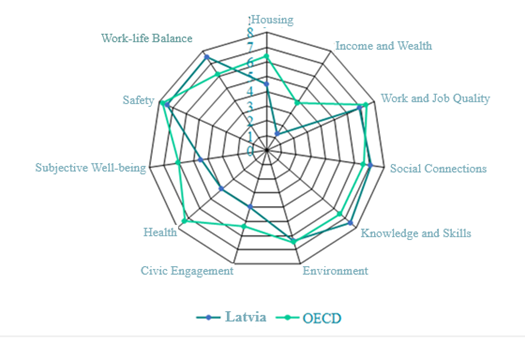
* Base value as of 2019 1. Characterisation of the Housing Situation Housing affordability is one of the fundamental needs of the population that also reflects the well-being of the population. Based on the OECD Better Life Index, Latvia is well behind the OECD average in the dimension "Housing".14 Figure 1 OECD Better Life Index, 202015
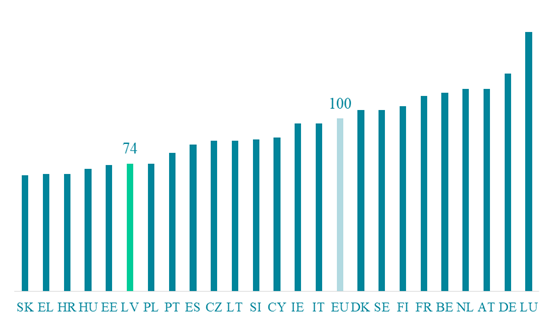
Source: OECD Better Life Index Although the disposable income of households increases every year (in 2021, household income increased by 6.5 % compared to 2020, reaching EUR 1523.5816), it is still insufficient to build substantial savings to purchase or rent modern housing, and it also causes challenges for maintaining and renewing the existing housing stock. Compared to other EU Member States, Latvia has one of the lowest levels of household income. According to Eurostat data for 2021, the household income level in Latvia, based on purchasing power parity17, represents only 74 % of the EU average household income per capita. Figure 2 Distribution of household income by purchasing power across EU Member States in 202118 Adjusted net income per capita based on PPS, EU-27=100
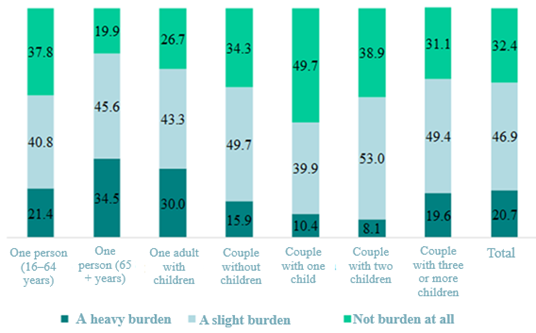
Source: Eurostat As shown in the figure, one of the reasons why household spending on housing is among the lowest across OECD countries is directly linked to the purchasing power of inhabitants. Since Eurostat has not published data on Romania, Bulgaria, and Malta, Figure 2 shows only 24 Member States. The analysis of Eurostat statistics by year suggests that the purchasing power of inhabitants tends to improve by one percentage point each year in Latvia, while it remains unchanged in other EU Member States. Primarily, inhabitants spend their disposable income on other needs which prevents them from making significant investments in housing. The distribution of household income by their disposable income shows that only upper-income households can afford significant investments in the purchase or improvement of housing. Compared with Western European countries, around one-third of Latvian households have an income level equivalent to the minimum wage in countries such as the Netherlands19 and Ireland20. The low household income makes it very difficult for around one-fifth of all households to cover housing expenditures.21 Figure 3 Housing maintenance expenditure influence on household financial situation by household type, 2020, %
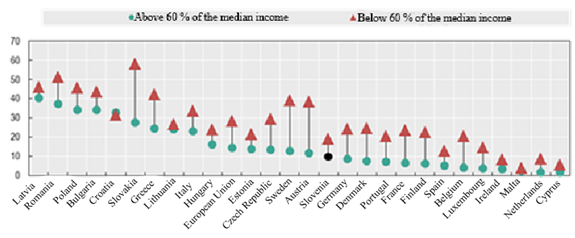
Source: Data published on the Portal of Official Statistics In 2020, the greatest difficulties with covering housing maintenance expenditures were experienced by single-pensioner households and single-parent families with children22. Among large families (couples with three and more children), around one fifth of them found housing expenditures a heavy burden which is significantly more than among couples with one child and couples with two children. Lack of money prevented 15.7 % of needy households and 14.22 % of households living below the poverty risk threshold from keeping their dwelling warm23. The greatest difficulties in keeping their dwellings warm were faced by single-parent families and single-pensioner households. Only around one third of households reported that the covering of housing expenditures was not a burden at all. In Latvia, 40 % of households live in overcrowded dwellings which is the highest rate in the OECD and one of the highest rates in the EU. Figure 4 Share of households living in overcrowded conditions by median income in the country in 2022, %25
Source: Eurostat Overcrowding is a problem in all income groups, as shown in Figure 5, with around 45 % of needy households and 40 % of upper-income households living in overcrowded conditions. Compared to other EU Member States, the overcrowding rate in Latvia is nearly as high among higher-income households as among lower-income population groups. The main reason for overcrowding is the low income of inhabitants which prevents them from purchasing a larger dwelling, and the insufficient housing stock for large households, especially in the regions with very limited construction of a new housing stock. As mentioned above, only one fifth of all households in Latvia reach the minimum wage levels of Western European countries. 1. Support for Vulnerable Population Groups As far as housing is concerned, assistance for inhabitants is provided by local governments for which the obligation to provide assistance to inhabitants in resolving housing matters, and also to promote the construction, maintenance, and modernisation of the housing stock is provided by the Local Government Law. Assistance in resolving housing matters is provided in accordance with the Law on Assistance in Solving Apartment Matters. Assistance by a local government in solving apartment matters falls within the scope of such area of social rights as social support provided by the State or a local government to persons who need such support and are unable to meet the relevant need on their own26. The forms of assistance specified in the Law on Assistance in Resolving Apartment Matters may be grouped as follows: • forms of assistance resulting in the rental of an apartment owned or leased by a local government; • forms of assistance related to granting of allowances. 1.1. Housing Allowance The Guidelines will not address matters concerning the possibilities of improving the housing allowance, as it is provided by a local government as a basic social assistance benefit in accordance with the procedures laid down in the Law on Social Services and Social Assistance, and also the situation and solutions for the reduction of exceptional increase in energy resource prices established under the Law on Measures for the Reduction of Exceptional Increase in Energy Resource Prices will not be analysed within the framework of the Guidelines27. However, for the sake of systemic comprehensibility in solving apartment matters, and also in the context of housing affordability, the Guidelines provide information on these allowances28. Data on social assistance provided by local governments represent the difficulties faced by needy households in covering housing expenditure. Table 1 Share of housing allowance out of the total social assistance expenditure of local governments and share of persons receiving housing allowance out of the total number of persons receiving social assistance, 2018-2022, %29
Source: Data of the MoW, calculation of the MoE The share of funds spent on housing allowances30 out of the total funds spent on social assistance in 2018-2022 ranged from 43 to 47 %, while the share of persons receiving housing allowance in this period exceeded 60 % of all social assistance recipients. Persons of retirement age have been identified as the largest group of housing allowance recipients. In 2022, the increase in social assistance expenditures was associated with Russia's initiation of warfare in Ukraine and the resulting energy crisis. Since 2015, large families, families raising children with a disability, persons with group I disability, and also needy and low-income households have been receiving a trade service of a protected customer, i.e. a reduction of the electricity bill payment by a certain amount. In accordance with Cabinet Regulation No. 345 of 1 June 2021, Regulations Regarding the Trade Service of a Protected Customer, in the period from November 2021 to 31 December 2023, large families received a monthly reduction of EUR 20 in their electricity bills, while other categories of inhabitants received a reduction of EUR 15. Table 2 Statistics on support for protected customers in 2022
Source: Information provided by the State Construction Control Bureau (SCCB) Housing affordability is also affected by the exceptional increase in energy source prices which impacts, and will keep impacting, the household's ability to pay utility bills. 1.2. Assistance through Renting out Housing of a Local Government a. Residential Spaces Owned or Leased by a Local Government Compared to other OECD countries, Latvia has one of the lowest social housing stocks, with social housing accounting for only 2 % of the total housing stock. Both the European Commission and the OECD point out the shortage of social housing. In addition, social apartments are in poor condition - 11.5 % of the population face poor living conditions which considerably exceeds the EU average of 4.3 %. Given the issues related to the accessibility and quality of social housing stock, Latvia is one of those countries that provides assistance to relatively narrow categories of persons, compared to other EU countries.31 Local governments provide social assistance through housing allowance to the part of vulnerable population groups and low-income households that have requested and are eligible for this type of allowance and meet the nationally established criteria for receiving housing allowance. Residential spaces owned or leased by a local government are primarily rented out to low-income persons or persons belonging to categories established by the local government who are evicted from a residential space. Exceptions are made for orphans and children left without parental care, repatriates, and also tenants of denationalised houses or houses returned to their legal owners. It is important that each orphan or child left without parental care receives adequate assistance in resolving housing matters, once they start leading an independent life after out-of-family care. In accordance with the Law on Assistance in Solving Apartment Matters32, this assistance is provided by the local government the Orphan's and Custody Court of which has taken the decision on out-of-family care. An orphan or a young person left without parental care has the right to choose either to rent the residential space offered by the local government or to receive a housing allowance for any rented dwelling within the administrative territory of Latvia33. For vulnerable population groups to rent a rental apartment of a local government, support can also be received in form of social apartment rental. The purpose of social apartment rental (granting the status of a social apartment) is to ensure the reduction of the portion of expenditure that is allocated by needy or low-income persons for housing expenditure and thereby to prevent a situation where these persons would be evicted from their dwelling due to housing debts. A social apartment is rented out to a needy or a low-income person belonging to the category of persons whose financial situation is unlikely to improve to the extent that they would be able to satisfy their housing needs on their own, e.g., a person of retirement age living alone or a person with group I or II disability living alone, or a family where all family members have group I or II disability. The main difference between a social apartment and an apartment rented out by a local government is that the rent for a social apartment is lower than the rent set for apartments of the relevant category owned or leased by the local government, and payments related to the use of a social apartment are partially or fully covered by the local government. In cases where a local government has already provided housing to all persons who need assistance as a priority, the local government has the right to rent out a residential space to other categories of persons who need assistance; however, in reality, the housing stock of local governments is not sufficient to provide a residential space even for those categories of persons who must be provided with a residential space as a priority. As recognised by the Senate of the Supreme Court34, when evaluating whether a person meets the conditions established by law in order to be eligible for local government assistance in certain circumstances, the criterion of the person's own ability to provide himself/herself with a residential space must be taken into account.35 In accordance with the information provided by all local governments within the framework of a survey conducted by the Ministry of Economics in September 2022, the number of persons registered for rental of a residential space owned or leased by a local government and included in the waiting list for social apartment rental on 1 September 2022 amounted to 5022, out of which 3819 persons were eligible for the rental of a residential space owned or leased by a local government, while 1203 persons were eligible for social apartment rental36. According to the data provided by the Latvian Association of Local and Regional Governments, around 1409 local government apartments were rented out in Latvia in 2020. To significantly reduce the waiting list for local government housing, the Ministry of Economics has developed an aid scheme for the construction or renovation of social housing37 that would allow to provide aid for the construction or renovation of at least 1500 dwellings. The aid scheme would allow to reduce the waiting list for social apartments of local governments and the waiting list for the apartments to which households are entitled on a priority basis by approximately 50 %; however, to completely eliminate the waiting lists for local government housing, additional funding of around EUR 143 million would be necessary out of which EUR 60 million would be allocated to households that are entitled to a residential space on a priority basis, while EUR 83 million would be allocated to households that have applied for solving apartment matters in accordance with the general procedures. The current legal acts do not provide an efficient mechanism to resolve housing issues in cases where a person loses the status of a status of a needy or low-income person, yet their income is still insufficient to purchase or rent an apartment in the rental market. As a result, the current social and local government housing rental system does not motivate persons of working age to increase their income and address the matters related to the provision of housing. Therefore, it is important to find a solution for developing the supply of affordable housing for persons who, due to their income, are not eligible for social assistance, yet cannot afford housing on market terms. b. Assistance through the Provision of a Temporary Residential Space Additional form of local government assistance is the ensuring of a temporary residential space to provide temporary housing to persons whose rented or owned residential space or residential house has been affected by a terrorist act, natural disaster, accident, or other catastrophe, and also tenants of denationalised buildings if the technical condition of the residential house endangers the lives of the residents, and local governments may also provide a temporary residential space to persons who are entitled to assistance on a priority basis until a residential space of the local government can be rented out to them. A modern housing policy should provide not only for long-term housing solutions but also for short-term solutions for population groups in need of urgent assistance or temporary stability which would allow more efficient planning of employment, education, and other (re)integration challenges, and there are two such groups identified which would be in need of social housing support. The first group includes inhabitants with low income who are unlikely to improve their material situation through employment, such as pensioners, persons with disability, etc. The second group at risk comprises inhabitants with moderately low income who have no savings and may therefore experience temporary difficulties related to illness, job loss, unexpected expenditure, or unusual life situations. Short-term housing assistance is also necessary for the victims of violence, regardless of their financial capacity, to ensure safety for such persons. In 2021 and 2022, the number of customers using the services of local government shelters and night shelters reached approximately 5810 persons which is on average around 500 persons fewer than in 2019 and 2020. Currently, this type of short-term housing assistance is mostly provided by NGOs.38 At present, the allocation of a temporary residential space laid down in the regulatory framework is not a permanent solution, as it is provided only until the previously used dwelling is renovated or the residential space of a local government is rented out. Since a temporary residential space might not meet the quality requirements laid down in the Law on Assistance in Solving Apartment Matters, it might not be suitable for long-term accommodation of a person. Given that the law does not specify a time limit during which a local government must provide the rental of a residential space instead of a temporary residential space, it may lead to a situation where persons entitled to a residential space on a priority bases remain for an extended period in premises that do not meet the quality requirements for adequate housing. It would be necessary to develop an aid scheme for local governments that would provide for the renovation or construction of temporary residential spaces. 1.3. Housing as a Social Service Social care, social rehabilitation, and social work services (hereinafter in this Chapter collectively referred to as social services) specified in the Law on Social Services and Social Assistance are provided to inhabitants based on the assessment of the person's individual needs and resources conducted by specialists, without linking the right to receive services or location where the services are received to the type of housing where the person is accommodated. Meanwhile, the abovementioned law also provides for such social care and social rehabilitation services where the accommodation of the service recipient or their provision with housing is one of the measures integrated into the service, including: • persons with mental health disorders (hereinafter - MHDs) who have objective difficulties in living independently, but there is no necessity to place them in a long-term social care institution, must be provided with a place to live in a group home (apartment); • persons with severe functional disorders must be provided with the opportunity to live in a service apartment by ensuring them the possibility of an independent life and increasing the social functioning and self-care capacities of such person; • homeless persons, i.e. persons without a fixed place of residence, have access to shelter and night shelter services, which provide temporary accommodation, food, personal hygiene facilities, and services of social workers; • persons in crisis situations may be accommodated in a crisis centre and receive psycho-social support from the centre's specialists while a solution is sought (Section 1 of the Law). Access to adequate housing in terms of price and quality in the relevant local government is a precondition for a successful deinstitutionalisation process, preventing the placement of persons with severe and very severe MHDs or children with functional disorders in long-term social care and rehabilitation institutions (hereinafter - the long-term social care institutions). The persons with MHDs, which are often combined with physical functional limitations, to be able to lead a relatively independent life outside a long-term social care institution, require not only affordable and adapted housing, but also the possibility to receive material support (social assistance benefits provided by local governments) and community-based social services at their place of residence corresponding to their functional condition. For this group of persons, due to their functional limitations, living in a group home (apartment) is currently the most suitable arrangement in local governments. In a group home (apartment), a person also has, in addition to accommodation, access to individual support in resolving social issues and, where necessary, to social care within the framework of the service. For persons with MHDs who move from a long-term social care institution to a group home (apartment), the accommodation costs are partly covered from the State budget. From 2015 to 2019, the number of persons moving from such long-term social care institutions to a group home (apartment) during a year increased from 5 to 18 persons per year. Unfortunately, according to the information provided by the group homes (apartments), during the same period, the total number of persons with MHDs living in group homes (apartments) for various reasons decreased from 97 to 73 persons. Meanwhile, in 2019, local governments provided the group home service from their own budget to 233 persons39. Investments in the development of group home (apartment) infrastructure in local governments within the framework of measure 9.3.1.1 "Development of service infrastructure for the implementation of deinstitutionalisation plans" during the ERDF planning period 2014-2020 will allow to ensure a greater number of places for customers in the group home (apartment). Through the implementation of ERDF DI projects, by the end of 2023 it is planned to establish 143 sites for the provision of social services to persons with MHDs which will allow to provide services to more than two thousand persons with MHDs, including to establish 48 group homes (apartments) that can accommodate 560 persons.40 The Law on Social Services and Social Assistance41 determines the right for refugees and persons with alternative status to use the services of crisis centres, night shelters, and shelters, and receive housing allowance in the amount calculated based on a single formula used throughout the country, and their eligibility for the allowance is reviewed every three or six months depending on the composition of their household. It should also be noted that these persons face difficulties in finding suitable housing for themselves and declaring their place of residence which, in turn, considerably restricts their right to receive the mandatory social assistance benefit or assistance in solving apartment matters from a local government42. The current situation shows that issues in providing comprehensive assistance through the rental of local government housing arise not only from the insufficient housing stock available for assistance but also from the incomplete definition of the groups of beneficiaries laid down in the Law on Assistance in Solving Apartment Matters. For instance, support through the rental of a local government apartment may currently not be received by needy or low-income persons who have not declared their place of residence, and such support may not be received by victims of violence, and persons who leave long-term social care institutions, etc.
From 2018 to 2022, the number of persons receiving shelter and night shelter services provided by local governments decreased from 6.8 thousand to 5.9 thousand service recipients. The main group of people receiving shelter and night shelter services, i.e. homeless persons, are adults without families. Throughout the reference period, men accounted for 81 % to 83 % of this group.43 Following the identification and addressing of social issues, it was concluded that the housing issue is the most pressing issue for homeless persons (97 %). Social workers provide them with housing support by relying on the options available in the apartment rental market. Meanwhile, 3 % of persons staying in shelters and night shelters who did not report a housing issue receive the shelter/night shelter service due to the fact that they are facing a crisis situation, e.g., they face difficulties in communication with their relatives or the dwelling is not suitable for living during the winter period.44 Social housing is defined as rental spaces of residential houses provided at below-market prices that are targeted and allocated according to specific rules, such as identified needs or waiting lists, and in the context of Latvia, in terms of its substance and purpose, it would correspond to a social apartment regulated in the Law on Assistance in Solving Apartment Matters. To understand the particular aspects of the definition of homelessness at the European level, the European Economic and Social Committee recommends to use the European Typology of Homelessness and Housing Exclusion (ETHOS) developed by the European Federation of National Organisations Working with the Homeless (FEANTSA). The typology covers several homelessness and housing exclusion categories: 1) rooflessness (living on the streets); 2) houselessness (accommodation in shelters, living in institutions due to housing exclusion, living in temporary accommodation, etc.); 3) living in insecure housing (insecure living conditions, risk of eviction, violence, etc.); 4) living in inadequate housing (overcrowding, illegal places of accommodation, etc.)45. In order to address the issue of homelessness in Latvia, it is necessary to develop a definition of homelessness and identify statistical indicators for comprehensive description of homelessness and identification of the target group, which would serve as a basis for developing a policy aimed at reducing homelessness. 1.4. Requirements for Quality and Accessibility of a Local Government Apartment Requirements for housing assistance are also defined in international legal acts, e.g., the right to adequate housing is enshrined in Article 31 of the Revised European Social Charter. It provides that Member States must take measures to ensure, at an adequate level, access to housing, prevent and reduce homelessness, and make housing costs affordable for those who lack sufficient resources. Latvia is also bound by the UN International Covenant on Economic, Social and Cultural Rights, Article 11 of which, inter alia, provides for the right to housing.46
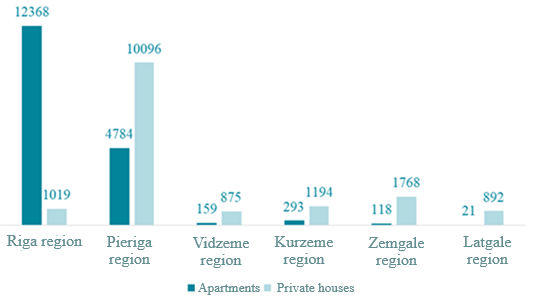
Given the changes in the housing stock of local governments in recent years, and also the technical and visual condition of the housing stock, local governments and the State have limited possibilities of providing persons with a residential space which makes it impossible to fulfil the obligation laid down in the Law on Assistance in Solving Apartment Matters, namely, to rent out residential spaces at the disposal of local governments to all categories of persons requiring such assistance, as specified in the Law. The military aggression initiated by Russia against Ukraine and the influx of Ukrainian civilians into Latvia have further exacerbated the shortage of housing stock at the disposal of local governments. The Ombudsman also highlighted the shortage of local government housing stock in his letter No. 1-12/6 of 28 August 2018 to the Ministry of Economics, pointing out that the responses from local governments to the Ombudsman's questions suggested that local governments are neither expanding the housing stock nor actively improving its technical condition, with the exception of cities such as Riga, Valmiera, and Cēsis. The housing stock is mainly expanded through the acquisition of heirless residential spaces and also through purchases and donations. The lack of funding prevents local governments from expanding the housing stock or improving its technical condition. The Ombudsman points out that local governments, when exercising one of their autonomous functions, namely, to provide assistance in solving housing matters to inhabitants, must intend funds for the housing stock development, with a particular focus on the promotion of access to social housing for vulnerable population groups. They must also ensure compliance with the standards of their residents' right to housing. In addition, it should be noted that not only housing owned by local governments but also the surroundings of those dwellings must be of good quality and meet modern requirements. Part of dwellings intended for local government assistance in Latvia are currently not located in the centre of populated administrative territories but rather in their outskirts, as a result of which the residents of these buildings often have no access to various services, such as shops, cultural and recreational institutions, educational institutions, convenient public transport, and other public services, and also most of them are not suitable for fulfilling the function of social residential houses, as they have been constructed for other purposes. Given that the Law on Assistance in Solving Apartment Matters does not define specific quality requirements for apartments and houses rented out by local governments, shared spaces and their surroundings, these requirements should be included during the development of the new law on accessible housing. 1.5. Tasks In relation to support for vulnerable population groups, a new law needs to be developed which would replace the current Law on Assistance in Solving Apartment Matters and cover the categories of persons who require State and local government support in resolving housing matters. At the same time, the new law should also define quality criteria for the residential premises that are rented out in accordance with the current Law on Assistance in Solving Apartment Matters. Based on the abovementioned conclusions, the new law should address the following issues: • assistance for needy persons experiencing structural poverty (inhabitants who are unlikely to improve their income through employment)47; • assistance for temporarily disadvantaged persons (inhabitants with moderately low income and no savings who may be affected by labour market fluctuations, former prisoners, victims of violence, etc.) who would require a temporary housing service with individual approach tailored to each person's profile and needs48; • assistance for socially vulnerable groups, such as single-parent families, families raising a child with a disability, and large families; • to define the concept "adequate housing"45; • to review the minimum requirements that a residential space of a local government must meet to be rented out; • to develop the minimum requirements for shared spaces if a rental apartment of a local government has no toilet, showering/bathing facilities, and kitchen; • to develop a mechanism that allows a person to receive assistance also in another local government, not only in the one where the person has declared their place of residence, if the person has a job offer/employment in another local government; • to develop conditions for the use of rented spaces in cases where needy or low-income persons, or other vulnerable persons no longer meet the criteria that served as a basis for the provision of assistance; • to develop a Social Housing Programme that all local governments in Latvia may apply for50. 2. Support for Middle-income Households One of the challenges in Latvia is the provision of housing that meets modern standards and energy efficiency requirements and at the same time is affordable. However, existing housing support leaves out a large part of households which is termed by the OECD in its study as the "missing middle", corresponding to around 44 % of all Latvian households that are too rich to receive social housing or the housing allowance and too poor to afford a mortgage and thereby address their housing needs on their own. For housing to be considered affordable, it must be commensurate with the size and financial capacity of the household. In the European Union and other developed countries, the most common method used is the housing cost burden approach, i.e. if household spending on housing (mortgage payments or rent, utility payments, maintenance costs) does not exceed 30 % of total expenditure, housing is considered affordable.51 In addition, the quality of housing should comply with modern construction and amenity standards, i.e. housing must be energy-efficient and equipped with sanitary facilities in the bathroom, toilet, and kitchen. The location of housing should also ensure access to employment, public services, transport, and the necessary infrastructure. Housing should also be commensurate with the size and composition of the household. The overcrowding rate represents the share of individuals living in overcrowded conditions, and it is measured based on the number of rooms in the household, the number of household members, their age, and family status. 41 % of households in Latvia live in overcrowded conditions which is the second lowest rate in the EU (compared to the EU average overcrowding rate of 17 %)52. However, overcrowding in Latvia is observed not only in needy households. More than 40 % of middle-income households in Latvia (households in the third income quintile) live in overcrowded conditions (compared to the OECD average of 10 %). Although household income gradually increases, it is still too low to build sufficient savings for the purchase or rent of better housing, as the prices of such housing exceed household income53. Low income prevents young parents not only from purchasing but also from renting housing, which is why they often prefer living with their parents.54 Housing affordability should also be addressed in the context of regional policy. Affordable housing is crucial for reducing regional development disparities. Only a small part of Latvian population lives in rented apartments (12 %) which reduces labour mobility and prevents the reduction of the high unemployment rate in certain regions. By comparison, in OECD member states on average, rental housing accounts for 23.5 % of all dwellings.55 Given the current situation with housing affordability in the regions and the ownership structure, engagement of local governments in the provision of housing and complementary actions in disparity reduction measures are also of great importance. According to the Regional Policy Guidelines 2021-2027 (adopted on 26 November 2019), the shortage of affordable and high-quality housing is one of the reasons hindering internal mobility and causing other adverse effects, thereby reducing the likeliness of attracting human resources for business activity and for increasing productivity in regions. In order to mitigate these factors that hinder development, local governments should have a comprehensive support model in place that covers not only regional mobility support but also the provision of housing for workforce. To address market gaps in the regions and provide affordable housing, on 14 July 2022, the Cabinet approved the conceptual report "State Support for Local Governments to Provide Inhabitants with High-quality Affordable Rental Housing" developed by the Ministry of Environmental Protection and Regional Development. Within the framework of this, it is planned to establish valsts kapitālsabiedrība "Mājokļu fonda institūcija" [State capital company Housing Stock Authority] that would provide different social groups of the population with affordable rental apartments and the objective to be achieved is 4000 new apartments. Over the past 10 years, only a few buildings with new apartments have been constructed in Riga and Pieriga, specifically, the total number of apartments in buildings constructed during this period amounted to 153 apartments in Vidzeme, 223 apartments in Kurzeme, 116 apartments in Zemgale, and 21 apartments in Latgale. Consequently, if an inhabitant wishes to live in a new, energy-efficient dwelling outside Riga or Pieriga, such properties are available only in very rare cases and only on the secondary market, while in Riga and Pieriga, compared to other Baltic countries, the supply of housing is developing considerably slower. This situation particularly negatively affects young families, young specialists, and university graduates who have access to a less attractive housing stock in the Latvian regions compared to Riga, Pieriga, or housing abroad. Furthermore, in certain local governments, such as Valmiera, Cēsis, and Sigulda, the supply of rental apartments is either limited or non-existent due to high demand, low supply, and prices that in some cases exceed the prices of equivalent housing in Riga. Figure 5 Number of dwellings commissioned in the regions between 2010 and 2022 (total)56
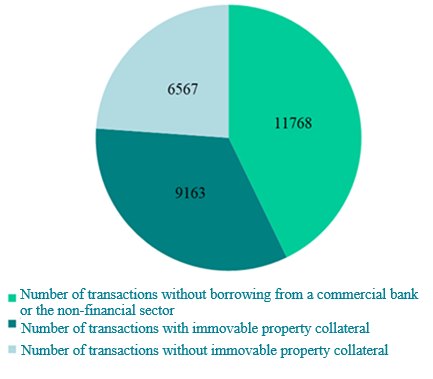
Source: Portal of Official Statistics An increasing number of inhabitants, especially young specialists under the age of 35, prefer to rent rather than purchase housing in order to have greater mobility opportunities. This trend is evident in many developed European countries where 30 %-40 % of inhabitants prefer to rent their housing rather than purchase it. Given the limited supply of rental housing, Latvian cities are less attractive from a housing perspective which, in turn, discourages the attraction of specialists and retention of families in these local governments. 2.1. Support for Affordable Rental Housing Insufficient purchasing power of the population is one of the primary obstacles to the development of the rental market, especially in the regions which has resulted in insufficient private sector investments in the construction of rental buildings. The loan terms available on the market are considerably shorter than the term of operation of a building which, in turn, increases the costs of rental of residential spaces and restricts access to such rental apartments for households with insufficient income. In 2021, Altum commissioned a study "Evaluation of Market Gaps in Financing Developers of Immovable Properties for the Development of Multi-apartment Building Projects Outside Riga and Pieriga"57. The study was developed by analysing the Transaction Register of the Price Bank for apartments, single-apartment houses, and "new projects", the archive of apartment advertisements, publicly available apartment rental advertisements, and statistics compiled by the State Unified Computerised Land Register on transactions based on purchase agreements, and also by interviewing the representatives of the Alliance of Real Estate Developers, commercial banks, the Union of Local and Regional Governments of Latvia, several local governments, and real estate developers. The main conclusions of the study show that there has been no active development of multi-apartment house construction projects outside Riga and Pieriga over the past five years, with an exception of few such projects. This can be explained by: • the equally high construction prime cost of multi-apartment houses in and outside Riga; • significant differences in apartment price levels, market activity, and the purchasing capacity of inhabitants when comparing Riga and Pieriga with other Latvian cities; • significant differences in immovable property market activity when comparing Riga and other cities; • the fact that only some real estate developers (construction merchants) specialise in operations outside Riga and Pieriga and that only a small part of them are able to meet the conditions for obtaining loans from credit institutions (own contribution to the project, equity, collateral, existing cash flow, etc.). It follows from the abovementioned that there is a lack of apartments offered for sale and rental, including "new projects" outside Riga and Pieriga which is attributable to the insufficiently high immovable property level in the abovementioned cities to ensure the profitability of such development projects; however, there is a demand for such apartments in regional development centres, especially for rental which points to a market gap in this segment. This shows that there is currently a shortage of affordable housing in the market - an issue also highlighted by the European Commission in the Country Report Latvia 2019.58 The shortage of affordable housing is also emphasized by the OECD in its study "Policy Actions for Affordable Housing in Latvia" published on 17 June 2020,59 indicating that there is a lack of private investments in the construction of rental multi-apartment houses and that 44 % of the households cannot afford to purchase housing under market conditions, and also that there is a demand for affordable rental housing; however, due to the small commercial rental market, there is a shortage of affordable housing for these households. In February 2021, the Ministry of Economics conducted a survey of local governments (except Riga and the local governments bordering Riga) to identify the demand for low-rent housing, and the local governments reported that there is a significant demand for such housing, i.e. around 1400 apartments were needed at that time. Taking into account the OECD recommendations and with due regard to existing market gaps and the fact that a sustainable long-term financing solution is required to address the shortage of affordable housing, a housing affordability fund for the construction of low-rent housing has been established with the support of the Latvia's Recovery and Resilience Facility funding (Cabinet Regulation No. 459 of 14 July, Regulations on Support for the Construction of Residential Rental Houses under the European Union RRF Plan, Reform and Investment Direction 3.1 "Regional Policy", Investment 3.1.1.4.i "Establishing a Financing Fund for the Construction of Low-rent Housing") for the purpose of improving housing affordability for those persons who cannot afford housing that meets modern construction standards and energy efficiency requirements under market conditions. According to the scheme conditions, a 30-year loan with low interest rates and a capital discount is provided for the construction of affordable rental housing, and restrictions on rent levels have been set. The repaid loan funding and a part of the rental payment after the repayment of the loan will be used for the construction of further housing which offers a solution for the availability of funding in the long term. Initially, the total funding for the implementation of the RRF low-rent housing construction programme amounts to EUR 42 900 000, which would allow to finance at least 467 low-rent apartments outside Riga and the bordering local governments; however, in the future, it will be necessary to expand the programme's territorial coverage by attracting additional funding to include the entire territory of Latvia, given that households with insufficient income are present in all local governments. The financing fund for the construction of low-rent housing should contribute to increasing the supply of high-quality affordable housing in Latvia and improving the quality and energy efficiency of the housing stock. From the perspective of the purpose of the construction of a new housing stock and the income groups of the population, low-rent housing should account for around 60 % or 6000 dwellings of all constructed dwellings each year. In order to meet this objective at current construction prices, around EUR 630 million per year would be required. Therefore, it is necessary to provide additional funding from the State budget during the "start-up" period and attract funding from institutional investors, such as investment banks, pension funds, and foreign capital. To attract the necessary investments for the construction of affordable housing, it is important to evaluate the public-private partnership between local governments and institutional developers where the latter would provide local governments with rental housing, provided that this simultaneously allows to determine an affordable rental payment. It is also necessary to evaluate the possibilities of reducing the proportion of liabilities attributable to long-term commitments (guarantees, loans) of a local government (currently set at 75 %) in cases where such liabilities arise from the construction of low-cost rental housing. Latvia needs to develop the rental market and continue to support households that cannot afford to rent housing on the market. Taking into account that this is a large proportion of households (around 44 % of all households), the Ministry of Economics' aid scheme for the construction of low-rent housing requires to attract additional funding to eliminate the market gap and address housing affordability issues in the long term. To ensure the effective operation of the aid scheme, it is necessary to evaluate the possibility of amending the regulatory framework to allow, in specific cases, to grant the superficies rights on local government land for the construction of rental housing. 2.2. Tasks •It is necessary to attract additional funding both from the State budget and institutional investors, such as investment banks or pension funds, for the construction of low-rent housing. State aid schemes should be developed following the principle that affordable rent is ensured and the attraction of private capital must be maximised to ensure sustainable investments, thereby achieving attraction of private capital to 1 invested public EUR at ratio of at least 1:3 to 1:5 (leverage effect). • To develop a housing affordability fund that ensures the reinvestment of the invested funding into the construction of further low-rent housing; • To evaluate the possibilities of reducing the proportion of liabilities attributable to long-term commitments of a local government (currently set at 75 %) in cases where such liabilities arise from the construction of low-cost rental housing; • To extend the maximum possible term of the Treasury loan to capital companies of local governments if the loan is used to ensure the construction of low-cost rental houses; • To develop an aid scheme for the construction of modular private houses in the regions where there is no demand for the construction of multi-apartment buildings, but there is a lack of housing stock in certain cases; • To evaluate the possibility of amending the regulatory framework to allow, in specific cases, to exercise the superficies rights on local government land for the construction of rental housing. The regulatory framework for the establishment of the superficies rights could be included under task 1.1 of the action direction, or the possibility of amending other laws and regulations will be evaluated. 3. Support for Upper-middle-income Households The OECD study on housing affordability in Latvia also addresses the relevance of housing affordability to demographic trends. According to the study, a range of considerations should be taken into account when evaluating the impact of housing affordability on decisions to form a family. With the first child, more space is often needed to sufficiently accommodate the entire family, thus the affordability of suitable housing may influence parenthood intentions of the household. Ownership of a dwelling or long-term rent provides additional housing security leading to positive associations with the intention and the likelihood of forming a family. Increase in housing prices may lead to postponed parenthood, as the extra housing space needed becomes less affordable. This may in particular affect those households in the early stages of their labour market career, as borrowing constraints and a lack of sufficient savings can restrict the possibilities to acquire adequate housing. According to the OECD, from the perspective of the impact of housing affordability on parenthood, it is important to distinguish between households who own their home and those who rent it. In its study, the OECD points out that the literature regarding the impact of housing affordability support policy on demography is scarce, yet national contexts with limited availability of mortgages are typically characterised by low fertility rates and a high average age at first motherhood.60 3.1. Support for Households for the Purchase or Construction of Housing The housing guarantee programme is very well received by the population, given that it helps families with children to cover the down payment on a loan for the purchase or construction of a dwelling. Since 2014, Altum has been providing guarantees to the following households within the framework of this programme: • those with at least one minor child living in the household and under their care; • in cases of pregnancy; • since 2018 - to young specialists; • since 2023 - to soldiers of the National Armed Forces. During the implementation of the programme, the following guarantees were provided as of 30 June 2023: • 26 000 guarantees to families with children with a total guarantee amount of EUR 208 million, covering a total of 38 000 children; • 5400 guarantees to young specialists with a total guarantee amount of EUR 45 million; • 80 guarantees to soldiers of the National Armed Forces with a total guarantee amount of EUR 800 thousand. Since 202061, the support mechanism "Balsts" has been available to large families to promote housing affordability, providing them with the possibility to receive a subsidy for the purchase or construction of housing. By 30 June 2023, 1054 subsidies "Balsts" with a total subsidy amount of EUR 8.8 million were provided, covering a total of 3312 children. In order to promote the implementation of the aid scheme, it is necessary to maintain this aid scheme and also review various solutions and financial instruments that provide targeted aid to families. It is also important to expand the scope of beneficiaries by including families raising a child with a disability, regardless of the number of children, taking into account the costs required to adapt housing for persons with functional disorders. Figure 6 Number of housing transactions and loans issued to private persons for the purchase of housing in Latvia in 2022
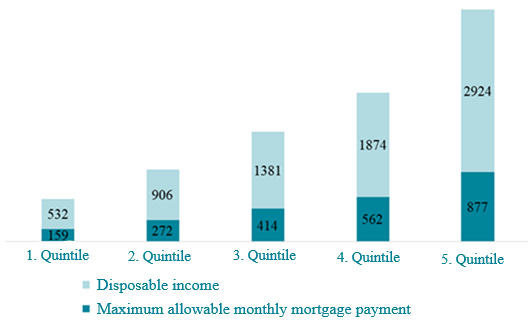
Source: SLS62, information provided by Latvijas Banka Out of all housing transactions, in 57 % of cases a loan was taken out for the purchase of housing, while in only 33 % of cases the purchase of housing was secured with immovable property (hereinafter - IP) collateral, which is an important precondition to receive a mortgage loan. In the remaining 23 % of cases, housing transactions were carried out without IP collateral which suggests that such transactions cannot be defined as mortgage loans but rather as other types of loans, e.g., the small housing loan offered by banks which is intended for housing up to EUR 20 000 with a fixed interest rate from 7.9 % to 14.9 % and a term of up to 10 years63. 81 % of all loans for the purchase of housing with IP collateral were issued in the Riga planning region which is explained by low IP values in regions. The number of loans issued for the purchase of housing in the regions is actually higher if loans without IP collateral are taken into account; however, this fact cannot be verified, as there is no information available on where housing is purchased in cases where the loan is issued without IP collateral. Figure 7 Household disposable income and the maximum allowable monthly mortgage payment64 by quintile groups in 2021, %, EUR
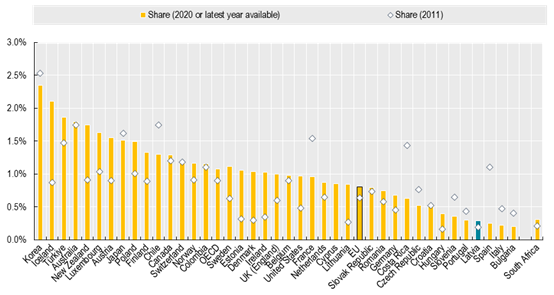
Source: Calculations of Latvijas Banka As shown in Figure 7, only upper-income households have access to a mortgage loan for modern housing. By using the mortgage calculators offered by different commercial banks which determine the maximum amount a household can borrow for the purchase of housing, it can be concluded that households in the third income quintile with two minor children can obtain a mortgage loan in the range of EUR 45 000 to EUR 68 000, while some commercial banks do not offer any loans to households with this income level and family size. For families with two children in the fourth income quintile, the mortgage calculators of commercial banks offer to borrow from EUR 45 000 up to EUR 125 000 for the property. Upper-income quintile households with two children may borrow up to EUR 200 000 for the purchase of housing. The analysis conducted by Latvijas Banka65 shows a similar situation, i.e. loans for the purchase of housing are mostly issued to upper-income households of Latvia. Given the differences in household income, immovable property values, and the cautious lending policies of banks in the regions, it is necessary to broaden and improve the conditions for obtaining loans under the existing housing purchase aid schemes in the regions, and also to evaluate the need to implement other targeted support instruments widely used in OECD countries to broaden housing affordability in Latvia. 3.2. Support for Developers in Housing Construction Latvia ranks among the OECD countries with the lowest levels of housing construction. As already abovementioned, one of the main reasons is the ow purchasing power of inhabitants. Figure 8 Share of commissioned dwellings compared to the existing housing stock in the OECD countries in 2011 and 202066
Source: OECD In terms of private investment, the construction of multi-apartment buildings in Latvia (including in Riga) is well behind Estonia and Lithuania.67 Figure 9 Number of constructed dwellings in the Baltic States in 2022
Source: Portals of Official Statistics of Latvia, Lithuania, and Estonia Only a few apartment buildings were built outside Riga - in Liepāja, Jelgava, Ogre, Sigulda, Cēsis, Smiltene, and Valmiera. It should be taken into account that regional immovable property developers often lack financial capacity (collateral, own contribution and equity, insufficient cash flow), and also in the regions there are additional project financing risks due to lower immovable property prices, personal income, and purchasing power. It should also be noted that only a few rental buildings have been built since 2010 and this sector is underdeveloped. Due to the low household income and purchasing power, the construction of rental housing in Latvia has very limited viability. Given the business strategies of private housing developers, the cautious lending policies of commercial banks, and the short loan repayment periods, rental housing would require high rental payments in order to ensure sufficient cash flow for loan repayment. Unfortunately, this significantly exceeds the purchasing power of inhabitants. The low level of activity of transactions, immovable property developers, investors, and banks in the development of multi-apartment building projects outside Riga and Pieriga is explained by the insufficiently high immovable property prices in the abovementioned cities to ensure the profitability of such development projects. Key considerations: • there are reasonable concerns about the economic justification of multi-apartment house development projects; • given the observed maximum apartment sales prices, it would most likely not be reasonable to plan the construction of multi-apartment houses and the subsequent sale of apartments under market project funding conditions (without the State support), as the apartment sales price would practically only cover the construction prime cost, and in such a case, investors could not plan apartment sales in the primary market which is subject to VAT. In certain cases, sales might be justified under special State support conditions or for rent with the right to purchase; • it can also be observed that the maximum apartment prices in the secondary market in certain cities are close to the prime cost of apartments, including "new projects," and in certain "new projects" the offered apartment prices could ensure sufficient project profitability; • overall it can be concluded that the development of apartment building projects outside Riga and Pieriga would be economically justified only in certain cities and/or under eased financing conditions. Mostly loans with a term of 15 to 20 years are available for immovable property development, developers are required to ensure own contribution of 30 %-50 % of project costs, and at least initially loan interest payments require cash flow from existing business activities, and also additional collateral which does not facilitate immovable property development in the regions is needed. Access to funding is limited, and funding is mostly available to immovable property developers with a strong financial capacity who are able to ensure the development of new projects with the cash flow from existing business activities and collaterals. In order to address funding availability for immovable property developers, the constructors in the regions have access to aid for residential house construction projects for rental and sales under market conditions since the end of 2021. An Altum SME loan can be obtained for the construction, renovation, or reconstruction of immovable property (building) the intended purpose of use of which is a multi-apartment building with three or more units. The territories to be supported are located outside Jūrmala, Riga, and municipalities adjacent to Riga (Mārupe, Olaine, Ķekava, Salaspils, Ropaži, and Ādaži municipalities). Loans are available for the construction of rental buildings and the construction of buildings for apartment sales. Similarly, since the end of 2021, guarantees for immovable property construction in the regions have also been available.68 Given that the construction of new housing is well behind the neighbouring countries, it is important to provide support by ensuring availability of loans and guarantees for real estate development for merchants who expand their operations in the regions, and also to involve institutional investors in the construction of new housing and use instruments such as public-private partnership, etc. 3.3. Tasks • To expand and improve the conditions of the existing housing purchase aid schemes and the aid intensity in the regions; • To evaluate the need to implement other targeted support instruments to improve housing affordability in Latvia; • To provide support by ensuring availability of loans and guarantees for immovable property development for merchants who expand their operations in the regions. 4. Support for the Improvement of the Existing Housing Stock The existing housing stock in Latvia is rapidly ageing. Since the restoration of Latvia's independence, around 10 % of all residential buildings have been built after 2003, while the only 3 % of the total share of multi-apartment buildings have been built after 2003 (4 % since 199369). Investments in housing in Latvia have been low due to various reasons, including due to the personal income and population decline. Lack of investments in housing is also highlighted in the OECD study on housing affordability in Latvia70. Figure 10 Distribution of multi-apartment buildings by the year of their commissioning92
4.1. Housing Maintenance Responsibility for maintaining the quality of residential house and thereby preventing their premature deterioration lies with the homeowners. In order to ensure effective administration of multi-apartment residential houses, it is important to distinguish between the responsibilities and obligations of the administrator and apartment owners. The Ministry of Economics is developing a new law on the administration of multi-apartment residential houses which provides for the establishment of legal preconditions for effective administration of multi-apartment residential houses, thereby ensuring the operation and maintenance of residential houses (physical preservation throughout their entire service life) and their development in conformity with the requirements of laws and regulations, while also clearly defining the rights and obligations of apartment owners, the community of apartment owners, joint owners, administrators of residential houses, and other persons involved in the administration of the residential house. To support the inhabitants and facilitate access to finance for the renovation of multi-apartment houses and improvement of their amenities, the aid scheme of ALTUM has been available for loans intended for investments in improving the technical condition and amenities of housing. The loan is intended for: • the construction of divisions and shared spaces, e.g., external walls, the replacement of windows, including the modernisation and replacement of lifts; • the renovation, reconstruction, and installation of engineering systems; • the construction, reconstruction, or renovation of the carriageway, sidewalk, or parking lot; • the installation, reconstruction, or renovation of lighting; • other improvements, such as the construction of children's playgrounds and the installation, reconstruction, or renovation of benches, bicycle stands, waste binds, waste containers, sports grounds, laundry drying facilities, etc.; • costs related to the technical documentation of a project, and also for project management, author's supervision, and supervision of construction work. It is possible to receive funding if a credit institution has refused to provide funding and the owners of the residential house have voted in favour of the project implementation and loan acquisition (at least 50 % + 1 vote). The available funding ranges from EUR 10 000 to EUR 400 000, with a loan term of up to 20 years.71 In total, 86 multi-apartment buildings have made use of the aid scheme. Given that the administration of residential buildings often gives rise to disputes between the owners of the residential house and its administrator, and also between individual apartment owners and the community of apartment owners, amendments to the Law on Residential Properties have been developed that provide for the protection of an individual apartment owner against the inaction of the majority. Amendments to the Law provide the right for the active part of apartment owners who are in the minority (represent less than half of the residential properties in a residential house) to decide on matters that until now could only be decided in cases where the general meeting was attended by apartment owners representing more than half of the residential properties in the residential house or where those apartment owners participated in a survey, and the amendments also establish that in cases where a general meeting does not have a quorum (the apartment owners registered in the participant registration list do not represent more than half of all residential properties), it may be reconvened. If a general meeting with the same agenda is reconvened within a month, it shall have a quorum, provided that the apartment owners registered in the participant registration list represent more than one third of all residential properties. The residents' awareness of their obligations as apartment owners and joint owners in a multi-apartment building plays a crucial role in the maintenance of residential buildings. On 4 March 2020, the Ministry of Economics, the Ministry of Environmental Protection and Regional Development and 34 State administrative institutions, non-governmental organisations, and State-owned capital companies signed the revised Memorandum of Cooperation, committing to jointly provide access to information on the possibilities for building renovation, reconstruction, and energy efficiency improvement, such as information on sources of funding, including co-funding of the European Union, possibilities of implementing energy efficiency projects, and also issues related to the administration of multi-apartment residential houses, to inform on the benefits of building renovation and reconstruction, the importance of well-being (microclimate, acoustics, ventilation, etc.) in buildings, sustainability in the construction and maintenance of buildings, innovations, smart decisions and digitisation in construction and energy efficiency, and also to promote their development, educate the parties involved in the construction process about quality conditions for building renovation processes, requirements for the construction products and the technologies for their incorporation. To raise awareness among residents about the improvement of the housing stock they own, it is necessary to continue developing broad information campaigns aimed at raising awareness among residents about the need to invest in their housing. Raising their awareness of these necessary actions is the only way to promote investments in the improvement of the technical condition and energy efficiency of housing. 4.2. Renovation of Buildings Table 3 Number of dwellings requiring renovation by type, area, and potential costs, m2, EUR
Source: Estimate of the Ministry of Economics *Estimated number of buildings requiring renovation According to the estimations of the Ministry of Economics, 190 000 dwellings with a total area of 56.1 million m2 would require renovation, and the total investments would reach EUR 21.6 billion which amounts to nearly twice the State budget of Latvia and more than half of Latvia's GDP at current prices. Table 4 Aid schemes for improving energy efficiency in residential buildings by type of building, periods, funding, and number of aided buildings, EUR
So far, a total of 740 buildings have been renovated under the first energy efficiency programme for multi-apartment residential buildings (2007-2013), while a total of 627 buildings were renovated under the programme 2014-2020 which in total accounts for only 5.13 % of all apartment buildings requiring renovation. Given the urgent need for investments in measures aimed at improving energy efficiency in multi-apartment buildings, funding of EUR 230.5 million is available for the upcoming years from the European Union structural funds and the RRF for housing renovation, and with the currently available funding for the EU fund planning period it is expected to renovate around 500 multi-apartment residential buildings, thereby reaching a number of improved buildings that represents only around 7 % of the target number of multi-apartment buildings requiring renovation. As for private houses, the State has supported energy efficiency improvement measures for 9028 dwellings which accounts for 5.5 % of all private houses requiring renovation. Buildings account for 40 % of energy consumption and 36 % of energy-related direct and indirect greenhouse gas emissions in the EU. Therefore, this is a leverage necessary to implement the Renovation Wave plans75, with specific regulatory, financing, and incentive measures aimed at least doubling the annual building energy renovation rate by 2030 and promoting deep renovation. In addition, the Fit for 55 climate package published by the EC calls for promoting the achievement of climate targets by 2030 through a reduction of greenhouse gas emissions by 55 % in order to ensure the necessary reductions for reaching the long-term goal of climate neutrality by 2050. In view of the abovementioned, the proposal developed by the EC and examined in trilogue for the Directive of the European Parliament and of the Council on the energy performance of buildings (hereinafter - the proposal) is to be used as the main legislative instrument for achieving decarbonisation targets of 2030 and 2050. The key objectives of the proposal are to reduce greenhouse gas emissions and final energy consumption in buildings by 2030 and to ensure compliance of all buildings with the climate neutrality requirements by 2050. The achievement of these objectives requires significant increase in the building renovation rates. The proposal also aims at setting additional requirements for new buildings, covering not only energy efficiency but also factors such as healthy indoor climate, adaptation to climate change, fire safety, and accessibility for persons with a disability. Existing buildings are also expected to meet the established energy efficiency classes within specific time periods. Furthermore, it is planned to set technical requirements for overall energy efficiency of technical systems regarding their correct installation, adjustment, and control. It should be noted that compliance with the requirements outlined in the proposal will have a significant impact on building renovation, providing additional obligations. Taking into account the purchasing power of inhabitants and their activity in housing renovation, systematic State investments in housing renovation are required, and also inhabitants should be incentivised to build larger savings for the renovation of the housing stock. It cannot come down to situations where savings intended for the renovation of the housing stock are spent on other needs, e.g., for settling utility debts in a multi-apartment house. To minimise the renovation costs of multi-apartment dwellings as much as possible, the Ministry of Economics has started developing standardised renovation projects for serial type buildings, and it is planned to simplify energy efficiency programmes. Taking into account the low purchasing power of inhabitants, not all multi-apartment houses can afford to make large investments in energy efficiency improvement required under the existing EU fund programmes, which is why it is important to develop a separate support mechanism that would allow to perform energy efficiency improvement work gradually. To accelerate the housing renovation, and also reduce costs necessary for housing renovation per one inhabitant, it is necessary to work on solutions that would facilitate the renovation of several houses at the same time (city blocks, entire rural villages) which would allow to attract ESCO service providers operating with large-scale contracts. An additional solution for reducing housing renovation costs would involve a wider use of prefabricated panels which considerably shortens the renovation duration and consequently the costs. In order to further motivate inhabitants to invest in housing renovation, it is necessary to evaluate the potential incentives for households during the process of developing the Tax Policy Guidelines 2023-2027, for instance, the possibility of introducing personal income tax reliefs if a residential house is to undergo renovation (including energy efficiency improvement), and also to consider immovable property tax reliefs if the housing is to undergo energy efficiency improvement measures, etc. Taking into account the required amount of investments for housing renovation, climate targets cannot be achieved with the funding of EU funds alone, which is why it is important to attract additional funding from other sources that would be invested in housing renovation. 4.3. Environmental Accessibility According to the UN Convention on the Rights of Persons with Disabilities, it is necessary to ensure that persons with disabilities can exercise all human rights and fundamental freedoms, while promoting respect for their inherent dignity. However, people with disabilities in Latvia still face obstacles that hinder the exercise of their right to live independently and participation in social processes, including access to housing.
According to the study "Evaluation of the Implementation of the UN Convention on the Rights of Persons with Disabilities in Latvia"76 published on 30 June 2020, the abovementioned housing adaptation service is used in very rare cases as both State-funded services and services funded by local governments. A State-funded housing adaptation service is not available for persons with disabilities, even though it is highly necessary, as in order to make use of State-provided material support, the person must take a loan from a credit institution which is not always possible for persons with disabilities, especially those who are unemployed or have low income. This group of persons lacks sufficient financial resources to receive a loan for the adaptation of housing, and also there are administrative obstacles in having the shared spaces in an apartment building adapted to their needs. The amount of the housing adaptation allowance funded by local governments may differ significantly between one local government to another, and no such data is collected. According to the experts, the reason lies in both the insufficient amount of the allowance and the administrative procedures for receiving the allowance which persons with disabilities, especially those living alone, cannot carry out on their own.77 Taking into account the abovementioned, it is necessary to take measures to ensure that people with disabilities have access to their housing and their ability to move independently from their housing is not restricted, to ensure that they can fully access services and labour market, and also to promote equal opportunities and social inclusion of persons with disabilities. As for accessibility, within the framework of round two "Support measures for ensuring the accessibility of housing environments for persons with disabilities" of investment 3.1.2.1.i "Measures to promote access to public services and employment for people with disabilities" of reform 3.1.2.r "Access to social and employment services in support of the minimum income reform" of reform and investment direction 3.1 "Regional policy" of component 3 "Reduction of Inequality" of the Recovery and Resilience Facility Plan (hereinafter - the measure), it is planned to provide support measures for 259 persons with disabilities for ensuring accessibility of their housing environment. The support measure may entail the installation of ramps and lifts, adaptation of residential and shared spaces, automated opening of gates, construction of rigid pavement from the property boundary to the entrance door of dwelling, etc. The RRF measure aims to improve the quality of life of persons with disabilities (persons with the group I or II disability aged 18-63 (inclusive) and children with disabilities aged 15-17 (inclusive) who have mobility impairments) and to ensure them equal opportunities for access to the labour market, and also health, education, and social services. The measure is to be implemented from 2023 to 2026, with a total funding of EUR 4.7 million or EUR 18 299 for the adaptation of one dwelling. In order to promote housing accessibility in multi-apartment houses, it is important to invest in ensuring physical accessibility by supporting the adaptation of individual dwellings for persons with mobility impairments and the improvement of environmental accessibility of housing in multi-apartment buildings by installing lifts. The Ministry of Economics is currently working on an aid scheme which aims to improve the environmental accessibility in multi-apartment houses by installing lifts. The allocated aid of EUR 18.5 million is expected to enable the improvement of 85 multi-apartment buildings. The society in Latvia is rapidly ageing, as is the case in all of Europe. In the beginning of 2021, there were 393 698 seniors aged 65 and over living in Latvia which represents 20.8 % of the population. 30 years ago (1991), the share of seniors was nearly twice as small - 11.8 %, while in 2003, this indicator stood at 15.8 %.78 Although the total population of Latvia is declining, the number of elderly residents continues to grow. Population ageing represents important constraints on the mobility of people, including the accessibility of housing. Taking into account this process, in the future, a particular emphasis should be placed on this aspect as early as in the housing design stage by providing appropriate solutions to ensure the quality of life of seniors. In many European countries79 facing population ageing, senior community projects are developed, as pensioners do not wish to live with their children or in nursing homes - they want to be, and are able to remain, socially active. With the population ageing becoming increasingly apparent in Latvia, it is necessary to evaluate the necessary aid for the implementation of senior community projects and launch pilot projects. 4.4. Tasks • To develop an effective regulatory framework for the administration of multi-apartment residential houses; • To ensure accessible aid for investments in the maintenance and organisation of multi-apartment residential houses; • To provide aid for the implementation of energy efficiency measures in multi-apartment buildings and private houses; • To simplify administrative requirements in aid schemes; • To develop standardised solutions for improving the energy efficiency of serial type multi-apartment houses; • To provide investments in ensuring the accessibility of housing. Annex 1: Action Directions and Tasks
Annex 2: Link-up of the Guidelines to Policy Planning Documents and Legal Acts • UN Universal Declaration of Human Rights (in force in Latvia since 4 May 1990) establishes the prohibition of violating the inviolability of any person's dwelling. • UN International Covenant on Economic, Social and Cultural Rights (in force in Latvia since 14 July 1992), where Article 11 establishes the person's right to housing. In accordance with Paragraph 1 of this Article, the States Parties to the present Covenant recognise the right of everyone to an adequate standard of living for himself and his family, including adequate food, clothing and housing. It also stipulates that the States Parties will take appropriate steps to ensure the realisation of this right. • General Comment No. 4 of the UN Committee on Economic, Social and Cultural Rights on Article 11 of the UN International Covenant on Economic, Social and Cultural Rights where it is clarified that the right to housing should not be interpreted in a narrow sense, but rather as the right to live in security, peace and dignity. It should be taken into account that the right to housing is integrally linked to other human rights which cannot be viewed in isolation one from the other. For instance, fundamental human rights such as the right to dignity, equality, the right to freedom of expression, the right to freedom of association, the right to freedom of residence and the right to participate in public decision-making, the right to housing are addressed together, and can be exercised in interaction. The document also clarifies the minimum standard of the right to adequate housing. • Resolution adopted by the UN General Assembly on 12 August 2015 on the 2030 Agenda for Sustainable Development (Goal 11 - Make cities and human settlements inclusive, safe, resilient and sustainable, with Target 11.1 - By 2030, ensure access for all to adequate, safe and affordable housing and basic services and upgrade slums). • Article 9(1)(a) of the UN Convention on the Rights of Persons with Disabilities (To enable persons with disabilities to live independently and participate fully in all aspects of life, States Parties shall take appropriate measures to ensure to persons with disabilities access, on an equal basis with others, to the physical environment, to transportation, to information and communications, including information and communications technologies and systems, and to other facilities and services open or provided to the public, both in urban and in rural areas. These measures which shall include the identification and elimination of obstacles and barriers to accessibility, shall apply to, inter alia, buildings, roads, transportation and other indoor and outdoor facilities, including schools, housing, medical treatment institutions and workplaces). • European Social Charter (in force in Latvia since 2 March 2002) and the Revised European Social Charter (in force in Latvia since 27 February 2013) stipulate that the Parties must take measures designed to promote housing affordability at an appropriate level, prevent and reduce homelessness, and make the price of housing affordable for those without adequate resources. • Charter of Fundamental Rights of the European Union, where Article 34(3) stipulates that the Union recognises and respects the right to social and housing assistance so as to ensure a decent life for those who lack sufficient resources, in accordance with the legal acts of the European Union, and also national legal acts and practices. • European Pillar of Social Rights - 19. Housing and assistance for the homeless - Access to social housing or housing assistance of good quality shall be provided for those in need. Socially vulnerable persons have the right to appropriate assistance and protection against forced eviction. Adequate shelter and services shall be provided to the homeless in order to promote their social inclusion. • Constitution of the Republic of Latvia - although the Constitution does not explicitly guarantee the right to housing, Article 109 of the Constitution guarantees the right to social security which also entails social assistance, while social assistance involves, inter alia, ensuring that individuals have access to the means necessary to meet their fundamental needs, including housing.82 • Annual Evaluation of Poverty and Social Exclusion Reduction Policy Regarding Changes in the Policy in 2015 and 2016 (with in-depth focus on disparities in healthcare and access to housing) (evaluations 2 and 3)83 - according to Paragraph 3.1.2 (p. 240), housing is one of the fundamental needs laid down in Section 1, Clause 11 of the Law on Social Services and Social Assistance. Article 96 of the Constitution of the Republic of Latvia determines that "everyone has the right to inviolability of his or her private life, housing and correspondence",84 thereby indirectly establishing the right to housing as one of the fundamental human rights. The National Development Plan of Latvia for 2021-2027 (adopted on 2 July 2020) includes the action direction "Housing" with the following objectives: Housing is available to all households in Latvia. By 2050, the existing housing stock meets high standards in energy efficiency, construction, safety and amenities. The legal framework encourages private and public investment in the establishment of housing stock. • The National Industrial Policy Guidelines 2021-2027 (adopted on 16 February 2021), under the action direction "Human Capital", outline the task for the promotion of housing affordability, highlighting the need to promote rental housing affordability, improve access to social housing, especially for disadvantaged persons, thereby giving the residents of the social housing stock the opportunity to move to areas with growing employment opportunities, and also to increase private investments in immovable property development and improve targeted support for the purchase of housing. The task identifies the need to provide support for sustainable housing with low construction and operation costs, primarily in areas with potential for new jobs, specifying that a sustainable immovable property tax policy that promotes investments is necessary for this purpose. • The Regional Policy Guidelines 2021-2027 (adopted on 26 November 2019), under the action direction "Attracting Human Capital in the Regions", outline the task "Housing Affordability for Workforce in the Regions" which involves the development of proposals for an effective set of support instruments for ensuring housing affordability in Latvia in cooperation with the OECD by adopting and adapting international good practices. They also provide that after conclusion of the OECD project, further action will involve the discussion of OECD proposals with local governments and social partners, including the ECL and LCCI, by developing a set of support instruments for ensuring housing affordability appropriate for the situation of Latvia. • The Social Protection and Labour Market Policy Guidelines 2021-2027 (adopted on 1 September 2021) outline a task to develop proposals for the provision of high-quality affordable housing to population groups at risk of poverty and social exclusion, for inhabitants in crisis situations, and for inhabitants to promote regional mobility, and also the task of developing proposals for improving the environmental accessibility in multi-apartment buildings by installing lifts, promoting the freedom of movement of persons, including their integration into education and the labour market. • National Energy and Climate Plan 2021-2030 (adopted on 4 February 2020) that outlines the objectives of Latvia and their implementation measures in the following sectors or activities: reduction of greenhouse gas emissions and increase of carbon dioxide sequestration, increase of the share of renewable energy resources, improvement of energy efficiency, ensuring of energy security, maintenance and improvement of energy market infrastructure, and also the enhancement of innovation, research, and competitiveness. • The informative report "Long-term Strategy for Building Renovation" (adopted on 10 November 2020) outlines the actions to be taken to achieve the objectives of energy efficiency of buildings for 2030. • The Action Plan for Measures to Improve the Technical Condition of the Housing Stock During its Operation (adopted on 11 December 2020) outlines a set of measures for improving the technical condition of the housing stock, determining the responsible authorities and terms of execution of those measures. • Law on Assistance in Solving Apartment Matters (came into force on 1 January 2002). The Law determines which persons have the right to receive assistance in solving residential space matters, and also the procedures by which the assistance is provided for inhabitants in solving apartment matters. • Residential Tenancy Law (came into force on 1 May 2021). The Law determines the legal relationship between the lessor of a residential space and the tenant, determining their general rights, obligations and responsibility, the grounds for the termination of legal relationship, and also the basic provisions of a residential tenancy agreement. • Law on Residential Properties (came into force on 1 January 2011). The Law determines the status of a residential property, the rights, obligations, and responsibility of an apartment owner, and also the competence and procedure for the decision-making of the community of apartment owners. • Law on Administration of Residential Houses (came into force on 1 January 2010). The Law determines the principles for the management of residential houses, the mutual relations, rights, obligations, and responsibility of the persons involved in the management process of residential houses, and also the competence of the State and local governments in this area. • Law on Social Services and Social Assistance (came into force on 1 January 2003). The Law determines the principles of providing and receiving social assistance (including the housing allowance, service apartments, and group homes), and the range of persons eligible to receive these services and assistance. • Local Government Law (came into force on 1 January 2023). The Law determines housing assistance as an autonomous function of a local government. Annex 3: Indicative Evaluation of the Impact on State and Local Government Budgets Measures in 2023 and 2024 will be implemented within the scope of the allocated funds, while the issues of allocating additional State budget funds for 2025 and subsequent years for the implementation of the tasks outlined in the Guidelines shall be examined by the Cabinet during the process of preparing the draft law On the State Budget for 2025 and On the Budget Framework for 2025, 2026, and 2027, along with applications for priority measures submitted by all ministries and central State institutions, considering the financial capacity of the State budget. The funding necessary for the implementation of projects and measures co-financed by the European Union policy instruments and other foreign financial assistance will, in accordance with the procedures laid down in laws and regulations, be requested under Programme 80.00.00 "Undivided Funding for the Implementation of Projects and Measures Co-financed by the European Union Policy Instruments and Other Foreign Financial Assistance" of Unit 74 "Funding to be Reallocated During the Implementation of the Annual State Budget". The impact on the general government budget balance in accordance with the conditions outlined in the methodology of the European System of Accounts will be developed at the stage of implementing the tasks of the action directions. The indicative impact assessment of the Guidelines on the State and local government budgets is included in Annex 3, and it may be subject to changes depending on the actual calculations during the development of the action tasks of the Guidelines.
1 The Housing Affordability Guidelines have been developed in accordance with the description of milestone included in the Annex of 5 July 2021 to the Council Implementing Decision on the approval of the assessment of the recovery and resilience plan for Latvia for the milestone 99 "Adoption of a housing affordability strategy" of the investment 3.1.1.4.i. Establishing a financing fund for the construction of low-rent housing. 2 Portal of Official Statistics, Mean disposable income per household (euro per month) (2021), available: https://data.stat.gov.lv/pxweb/en/OSP_PUB/START__POP__MI__MIS/MIS010/ 3 Portal of Official Statistics, Conventional dwellings by type of building and by year of construction (2021), available: https://data.stat.gov.lv/pxweb/en/OSP_PUB/START__POP__MA__MAS/MAS070/ 4 Portal of Official Statistics of Latvia, Number of new apartments commissioned (2022), available: https://data.stat.gov.lv/pxweb/en/OSP_PUB/START__NOZ__BU__BUE/BUE021/ 5 Portal of Official Statistics of Estonia, Number of new dwellings commissioned (2022), available: https://andmed.stat.ee/en/stat/majandus__ehitus__ehitus-ja-kasutusload/EH045/table/tableViewLayout2 6 Portal of Official Statistics of Lithuania, Number of new dwellings commissioned (2022), available: https://osp.stat.gov.lt/statistiniu-rodikliu-analize?hash=22fa9851-b65a-4369-b528-286ecf206f55#/ 7 OECD, Policy Actions for Affordable Housing in Latvia (2020), available: https://issuu.com/oecd.publishing/docs/latvia_housing_report_web-1 8 Portal of Official Statistics, Household consumption expenditure structure (%) (2021), available: https://data.stat.gov.lv/pxweb/en/OSP_PUB/START__POP__MB__MBI/MBI010/ 9 OECD, Policy Actions for Affordable Housing in Latvia, OECD, 2020: https://issuu.com/oecd.publishing/docs/latvia_housing_report_web-1 10 Eurostat, Severe housing deprivation rate by age, sex and poverty status - EU-SILC survey (2021), available: https://ec.europa.eu/eurostat/databrowser/view/ilc_mdho06a/default/table?lang=en 11 Target indicator No. 344 of NDP2027 action direction 12 Target indicator No. 346 of NDP2027 action direction 13 Target indicator No. 347 of NDP2027 action direction 14 The index "Housing" uses three indicators: • the proportion of average expenditure of households on housing in disposable income; • the proportion of dwellings without access to indoor flushing toilet; • the average number of rooms per one household member. The abovementioned indicators are standardised, and therefore the index is established. Compared to other OECD countries, Latvia ranks 34 among the 38 OECD countries. 15 OECD, Better Life Index (2020), available: https://stats.oecd.org/Index.aspx?DataSetCode=BLI 16 Portal of Official Statistics, Mean disposable income per household (euro per month) (2021), available: https://data.stat.gov.lv/pxweb/en/OSP_PUB/START__POP__MI__MIS/MIS010/ 18 Eurostat, https://ec.europa.eu/eurostat/databrowser/view/sdg_10_20/default/bar?lang=en 19 Minimum gross wage in the Netherlands from the age of 21: EUR 1995, net ~EUR 1800, source: https://www.government.nl/topics/minimum-wage/amount-of-the-minimum-wage A salary calculator was used to calculate the net wage: https://salaryaftertax.com/salary-calculator/netherlands 20 Minimum gross wage in Ireland from the age of 20: EUR 1959, net ~EUR 1759, source: https://www.citizensinformation.ie/en/employment/employment-rights-and-conditions/pay-and-employment/minimum-wage/ A salary calculator was used to calculate the net wage: https://salaryaftertax.com/ie/salary-calculator 21 Number of households in Latvia in 2022 - 825 200. Source: Portal of Official Statistics (2022), available: https://data.stat.gov.lv/pxweb/en/OSP_PUB/START__POP__MV__MVS/MVS010/ 22 Portal of Official Statistics, Housing maintenance expenditure influence on household financial situation, available: https://stat.gov.lv/en/statistics-themes/population/housing/tables/mai030-housing-maintenance-expenditure-influence 23 Portal of Official Statistics, The rate of households which could not afford to cover certain expenses due to the lack of money, available: https://data.stat.gov.lv/pxweb/en/OSP_PUB/START__POP__NN__NNN/NNN010/ 24 A household is considered as living in overcrowded conditions if less than one room is available in each household: for each couple in the household; for each single person aged 18 or more; for each pair of people of the same gender between 12 and 17; for each single person between 12 and 17 not included in the previous category; and for each pair of children under age 12. Rooms include bedrooms, living rooms, and dining rooms, and in countries outside Europe also kitchens. This indicator is calculated based on household surveys and is measured as a percentage of all replies of respondents (source: OECD, https://data.oecd.org/inequality/housing-overcrowding.htm) 25 Eurostat, Overcrowding rate by poverty status (2022), available: https://ec.europa.eu/eurostat/databrowser/view/TESSI172/default/table?lang=en 26 Supreme Court Judgment of 6 May 2010 in the case No. SKA-171/2010. 27 Other solutions for the reduction of exceptional increase in energy resource prices are outlined in the Law on Measures for the Reduction of Exceptional Increase in Energy Resource Prices which came into force on 27 January 2022. 28 Housing allowance is provided in all 43 local governments in Latvia, where their binding regulations define the following reliefs related to housing for vulnerable population groups, including housing assistance has been identified in 38 out of 43 local governments, co-funding is offered for connecting residential houses to the centralised water supply system and/or the centralised sewerage system in 13 out of 43 local governments; allowance is provided for the repair of residential spaces in 5 out of 43 local governments; local government assistance is provided for the repair of residential spaces in 2 out of 43 local governments; allowance is provided for covering the debt of expenditure related to the use of housing for low-income households of specific composition, e.g., with children, in 2 out of 43 local governments. See the Annual Evaluation of Poverty and Social Exclusion Reduction Policy (including the in-depth evaluation of low-income persons), 2022. 29 Ministry of Welfare, Statistics on social services and social assistance, available in Latvian: https://www.lm.gov.lv/lv/statistika-socialo-pakalpojumu-un-socialas-palidzibas-joma 30 Before 2020, this allowance was known as the apartment allowance, but as from 2021, it is referred to as the housing allowance. 31 Social housing in EU 32 Law on Assistance in Solving Apartment Matters, available: https://likumi.lv/ta/en/en/id/56812-law-on-assistance-in-solving-apartment-matters 33 As pointed out by the Ombudsman of the Republic of Latvia in his opinion in the inspection file No. 2018-35-23D, according to the survey results on the availability of housing stock in local governments and their ability to provide a young person with housing immediately after leaving out-of-family care, housing stock is available in only in 75 municipalities (63 %), and they are able to provide a young person with housing immediately after leaving out-of-family care. 39 local governments pointed out that their housing stock is insufficient, while in another five local governments the availability of housing stock varies and depends on demand. 34 Supreme Court Judgment of 620 May 2011 in the case No. SKA-102/2011 35 Administrative Regional Court Judgment of 15 April 2009 in the case No. A42447106, Paragraph 14.3 36 The local government of Valmiera municipality is the only local government where, as of 1 September 2022, no person was registered for receiving support referred to in Section 3, Clauses 1 and 2 of the Law. 37 Measure 4.3.1.3 "Renovation of social housing or construction of new social housing" of the priority direction "Employment and social inclusion" of the operational programme "Operational Programme for the European Union Funds for the 2021-2027 Programming Period" 38 Ministry of Welfare, Statistics on social services and social assistance, available in Latvian: https://www.lm.gov.lv/lv/statistika-socialo-pakalpojumu-un-socialas-palidzibas-joma 39 For more detailed information, see reports on social services and social assistance in the local government of a municipal/republic city available in Latvian at https://www.lm.gov.lv/lv/gada-dati 40 For more detailed information, see https://www.lm.gov.lv/lv/aktualitates-5 41 Law on Social Services and Social Assistance, available: https://likumi.lv/ta/en/en/id/68488-law-on-social-services-and-social-assistance 42 Study "Annual Evaluation of Poverty and Social Exclusion Reduction Policy (Including the Evaluation on Disparities in Healthcare and Access to Housing)", 2022 43 Ministry of Welfare, Statistics on social services and social assistance, available in Latvian: https://www.lm.gov.lv/lv/statistika-socialo-pakalpojumu-un-socialas-palidzibas-joma 44 Yearbook of the Welfare Department of Riga City Council "Sociālā sistēma un veselības aprūpe Rīgā 2019. gadā" [Social System and Healthcare in Riga in 2019], pp. 99-100, https://ld.riga.lv/files/Gadagramatas/GG_2019.pdf. 45 According to the ETHOS typology, the living situation of a household is characterised by the following domains: - physical domain: having an adequate dwelling (or space) over which a person and his/her family can exercise exclusive possession; - legal domain: having legal title to occupation; - social domain: being able to maintain privacy and enjoy relations. 46 Committee on Economic, Social and Cultural Rights, General Comment 4, The right to adequate housing (Sixth session, 1991): http://www1.umn.edu/humanrts/gencomm/epcomm4.htm 47 See the Providus 2021 study "Affordable Rental Housing in Latvia: Challenges and Opportunities" 48 Ibid 49 The lack of various statistical data for describing housing affordability has been identified as an issue that requires solutions. Stakeholders should organise a meeting to identify the missing and necessary data for describing various housing affordability aspects. Access to such data would allow for a more comprehensive description of the concepts of housing affordability and housing exclusion and would provide evidence for qualitative policy planning and assessment. 50 Meanwhile, in order to prevent situations where investments in addressing housing affordability create new isolated areas for vulnerable population groups or reinforce the existing ones, it is necessary to apply the principles of desegregation and non-discrimination, promoting equal access to high-quality affordable housing to reduce existing socio-economic segregation and inequality in the respective territories, and also no investments should be made that could maintain or lead to segregation or isolation. In line with all objectives of the Guidelines, all investments will ensure respect for fundamental rights and conformity with the Charter of Fundamental Rights of the European Union, the horizontal principles of gender equality, non-discrimination (on grounds of sex, race or ethnic origin, religion or belief, disability, age, or sexual orientation), and accessibility at all stages of planning and implementation. 51 Alice Pittini. Housing affordability in the EU: Current situation and recent trends (2021), available: https://www.housingeurope.eu/resource-122/housing-affordability-in-the-eu 52 Eurostat, Overcrowding rate by age, sex and poverty status - total population - EU-SILC survey (2021), available: https://ec.europa.eu/eurostat/databrowser/view/ILC_LVHO05A__custom_1513630/bookmark/table?lang=en&bookmarkId=5c55dfba-c13c-4e7a-9d5e-d637eb61bf04 53 Based on market research conducted by the Ministry of Economics, the current average rent in a new or renovated project that would meet generally accepted housing construction standards and energy efficiency requirements was determined and it stands at EUR 6.92/m². Taking into account the expenditure for utilities and management in a new or renovated project which amounts to EUR 2/m2, it follows that the monthly rent of a small apartment with an area of 50 m2 (including the expenditure for utilities and management) amounts to EUR 410 per month. 54 Study: The economically active segment of society already knows today what type of housing they want to live in tomorrow, available in Latvian: https://www.city24.lv/real-estate-news-story/12680/petijums-ekonomiski-aktiva-sabiedribas-dala-jau-sodien-zina-kada-majokli-velas-dzivot-rit 55 OECD, Housing Market (2020), available: https://www.oecd.org/housing/data/affordable-housing-database/housing-market.htm 56 Portal of Official Statistics, Number and floor space of new apartments commissioned by region, available: https://data.stat.gov.lv/pxweb/en/OSP_PUB/START__NOZ__BU__BUE/BUE021, https://data.stat.gov.lv/pxweb/en/OSP_PUB/START/BUE020 57 The study is a restricted-access report due to the opinion and private information of individuals included therein, and it is available to the Ministry of Economics and Altum. The study can be consulted by contacting Altum (altum@altum.lv) and justifying the need to consult the study. 58 Available: https://eur-lex.europa.eu/legal-content/EN/TXT/?uri=CELEX:52019SC1013 59 Policy Actions for Affordable Housing in Latvia, OECD, 2020: https://issuu.com/oecd.publishing/docs/latvia_housing_report_web-1 60 Policy Actions for Affordable Housing in Latvia, OECD, 2020: https://issuu.com/oecd.publishing/docs/latvia_housing_report_web-1 61 In 2020, the programme was once again expanded by enhancing the provision of State support for the purchase of housing for families with children and developing special support mechanisms specifically for large families. To provide greater support to families with four and more children living in the household and under their care or families with three children under their care where a pregnancy has occurred, the amount of guarantee for families with four and more children was increased under the programme to 30 % of the loan. 62 Open data from the immovable property market database (2022), available in Latvian: https://data.gov.lv/dati/lv/dataset/nekustama-ipasuma-tirgus-datu-bazes-atvertie-dati 63 For conditions and additional information on the loan offered by Swedbank, see: https://www.swedbank.lv/private/credit/loans/homeSmall?language=ENG 64 Without exceeding more than 30 % of the disposable income. 65 Makroekonomika.lv, Discussion of experts on increasing interest rates, available in Latvian: https://www.makroekonomika.lv/ekspertu-saruna-procentu-likmju-celsana-rugtas-zales-lai-neielaistu-infekciju#faq-3 66 OECD, Housing Market (2020), available: https://www.oecd.org/housing/data/affordable-housing-database/housing-market.htm 67 Statistical data of Estonia, available: https://andmed.stat.ee/en/stat/majandus__ehitus__ehitus-ja-kasutusload/EH06 Statistical data of Lithuania, available: https://osp.stat.gov.lt/statistiniu-rodikliu-analize?indicator=S8R047#/ Statistical data of Latvia, available: https://data.stat.gov.lv/pxweb/lv/OSP_PUB/START__NOZ__BU__BUE/BUE020/table/tableViewLayout1/ 68 For more information on programmes and their conditions, see: https://likumi.lv/ta/en/en/id/198282-regulations-regarding-loans-for-promoting-the-development-of-micro-small-and-medium-sized-merchants-and-agricultural-service-co-operative-societies and https://likumi.lv/ta/en/en/id/315560-regulations-regarding-guarantees-for-performers-of-economic-activity-for-the-improvement-of-competitiveness. 69 Information provided by the SLS 70 Policy Actions for Affordable Housing in Latvia, OECD, 2020: https://issuu.com/oecd.publishing/docs/latvia_housing_report_web-1 71 For more information on the aid scheme and its conditions, see: https://www.altum.lv/en/services/individuals/loan-for-renovation-of-apartment-buildings/ 72 Indicative assumption, given that the increase in construction costs in the upcoming years is unknown. Since the aid scheme has been open since 8 December 2022, at the beginning of September 2023, 15 projects with a value of EUR 5.77 million were under assessment, and the assessment was completed for 12 projects with a value of EUR 3.65 million, but physically, none of the multi-apartment buildings have been renovated yet. 73 Cabinet Regulation No. 103 of 11 February 2021, Regulations Regarding the Support Programme for the Renovation and Improvement of Energy Efficiency in Single-apartment Residential Houses and Two-apartment Residential Houses, available in Latvian: https://likumi.lv/ta/id/321021-noteikumi-par-atbalsta-programmu-viena-dzivokla-dzivojamo-maju-atjaunosanai-un-energoefektivitates-paaugstinasanai 74 Cabinet Regulation No. 150 of 1 March 2022, Procedure Rules for the Open Competition "Reduction of Greenhouse Gas Emissions in Households - Support for the Use of Renewable Energy Sources" for Projects Funded by the Emission Allowance Auction Instrument 75 For more information on the Renovation Wave Plan, see: https://ec.europa.eu/commission/presscorner/detail/en/ip_20_1835 76 Available in Latvian: https://petijumi.mk.gov.lv/sites/default/files/title_file/BISS_Gala_zinojums_LM_ANO_konv_30062020red_13072020%20%281%29.pdf 77 Study "Evaluation of the Implementation of the UN Convention on the Rights of Persons with Disabilities in Latvia", available in Latvian: http://petijumi.mk.gov.lv/sites/default/files/title_file/BISS_Gala_zinojums_LM_ANO_konv_30062020red_13072020%20%281%29.pdf 78 Portal of Official Statistics, Seniors in Latvia, 2021, available in Latvian: https://stat.gov.lv/lv/statistikas-temas/iedzivotaji/iedzivotaju-skaits/publikacijas-un-infografikas/8932-seniori-latvija 79 For information on each European Union country and the opportunities they offer, see: https://housingcare.org/retirement-properties-abroad/ 80 In accordance with Cabinet Order No. 537 of 20 July 2022, On State Support for Local Governments to Provide Inhabitants with Affordable Rental Housing of High Quality. 81 Within the framework of the round two "Support measures for ensuring the accessibility of housing environments for persons with disabilities" of investment 3.1.2.1.i "Measures to promote access to public services and employment for people with disabilities" of reform 3.1.2.r "Access to social and employment services in support of the minimum income reform" of reform and investment direction 3.1 "Regional policy" of component 3 "Reduction of Inequality" of Recovery and Resilience Facility Plan. The implementation of the measure is ensured by the Ministry of Welfare, while the funding is planned under the sub-programme 74.07.00 "Recovery and Resilience Facility (RRF) Funding for Implementers of Projects and Measures" of the Ministry of Finance, as the Central Finance and Contracting Agency (CFCA), acting as the cooperation authority, makes advance, interim, and final payments to the beneficiaries, i.e. local governments. 82 Administrative Regional Court Judgment of 28 April 2012 in case No. A421016109, available in Latvian: https://manas.tiesas.lv/eTiesasMvc/nolemumi/pdf/126829.pdf 83 Annual Evaluation of Poverty and Social Exclusion Reduction, available: https://www.lm.gov.lv/lv/projekts/ikgadejs-nabadzibas-un-socialas-atstumtibas-mazinasanas-ricibpolitikas-izvertejums 84 Constitution of the Republic of Latvia. Latvijas Vēstnesis No. 43, 1 July 1993, available: https://likumi.lv/doc.php?id=57980 (accessed on 30 October 2018) Minister for Economics V. Valainis Translation © 2025 Valsts valodas centrs (State Language Centre) |
Document information
Title: Par Mājokļu pieejamības pamatnostādnēm 2023.–2027. gadam
Issuer: Cabinet of Ministers
Type:
order
Document number: 739Adoption: 08.11.2023.Entry into force: 08.11.2023.Publication: Latvijas Vēstnesis, 219, 10.11.2023.
OP number:
2023/219.4
Language:   Policy planning document Title: MĀJOKĻU PIEEJAMĪBAS PAMATNOSTĀDNES 2023.–2027. GADAM Type: guidelinesField of politics: Housing policy Responsible authority: Ministry of Economics Related documents
|
||||||||||||||||||||||||||||||||||||||||||||||||||||||||||||||||||||||||||||||||||||||||||||||||||||||||||||||||||||||||||||||||||||||||||||||||||||||||||||||||||||||||||||||||||||||||||||||||||||||||||||||||||||||||||||||||||||||||||||||||||||||||||||||||||||||||||||||||||||||||||||||||||||||||||||||||||||||||||||||||||||||||||||||||||||||||||||||||||||||||||||||||||||||||||||||||||||||||||||||||||||||||||||||||||||||||||||||||||||||||||||||||||||||||||||||||||||||||||||||||||||||||||||||||||||||||||||||||||||||||||||||||||||||||||||||||||||||||||||||||||||||||||||||||||||||||||||||||||||||||||||||||||||||||||||||||||||||||||||||||||||||||||||||||||||||||||||||||||||||||||||||||||||||||||||||||||||||||||||||||||||||||||||||||||||||||||||||||||||||||||||||||||||||||||||||||||||||||||||||||||||||||||||||||||||||||||||||||||||||||||||||||||||||||||||||||||||||||||||||||||||||||||||||||||||||||||||||||||||||||||||||||||||||||||||||||||||||||||||||||||||||||||||||||||||||||||||||||||||||
|
Latvijas Vestnesis, the official publisher ensures legislative acts systematization function on this site. All Likumi.lv content is intended for information purposes. |
About Likumi.lv News archive For feedback Training Contacts |
Mobile version Terms of service Privacy policy Cookies Accessibility |
|